


Listen here.
“Everyone has their cross to bear.”
I can still hear those words. We were early in our marriage, and Susanna was going through a stretch of health problems that scared both of us. The person who said it meant well. They saw the worry on my face, they wanted to help, and that was the line that came out.
Everyone has their cross to bear. Ugh.
I nodded. I might have even said “thanks.” Then I walked away, and I felt worse than I had before. More alone. I felt heavier instead of lighter. I sat in my car for a few minutes before I turned the key.
That person wasn’t cruel. They were uncomfortable. They didn’t know what to say, so they said something, and that something made it all worse.
Here’s the part I don’t love admitting: I’ve been that person too. I’ve stood across from a friend in pain and felt my mouth go dry, and offered a quick fix, anything to fill the silence. When you don’t know what to say, saying nothing feels unbearable. So you say the wrong thing.
We’ve all been on both sides of this.
Someone tells you their kid is using drugs. Their marriage is falling apart. The scan came back, and the news was bad. You want to make it better. You have no idea how. And in that gap between wanting to help and knowing how, a lot of us say something we wish we could take back.
A few years ago, Susanna and I were sitting in a counselor’s office. At some point, she pulled up a short animated video by Brené Brown about the difference between empathy and sympathy.
I’ve never forgotten the heart of it:
Empathy fuels connection.
Sympathy drives disconnection.
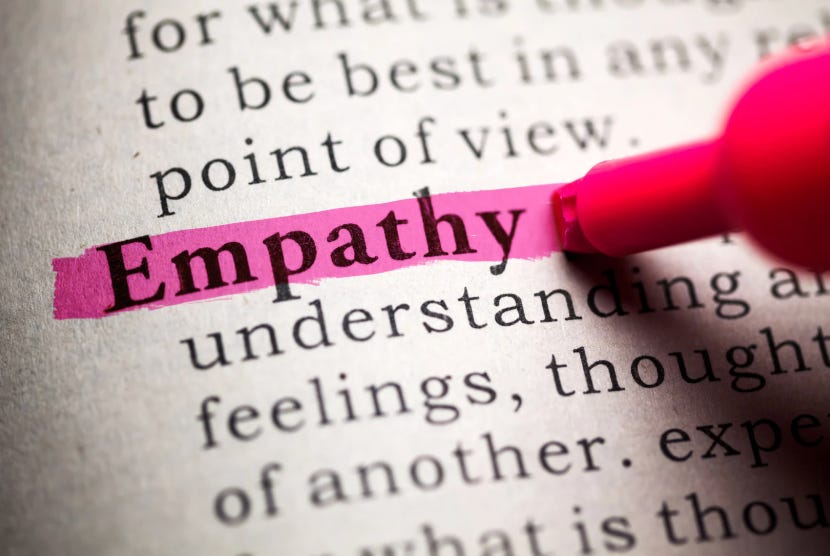
Sympathy says, “That’s too bad,” from a safe distance. Empathy climbs down into the hole with you. It says, “I know it’s hard. I know you’re hurting. I have no idea what to say. But I’m here, and you’re not alone in this.”
Empathy is harder. It costs you something. You have to sit in the discomfort instead of rushing to fix it. You have to let the silence be awkward. The quick fix is really for us, not for them. It only ends the discomfort on our side of the table.
But that person came to you. Out of everyone they could have told, they chose you. That’s not a problem to solve. That’s an honor to hold.
So what do you actually do?
Lead with being present, not with solutions. You don’t need the right words. You need to stay there and get ok with silence. Try something simple: “I am so sorry. That has to be so hard. Tell me more.” Then shut up and listen.
If you want to go further, try this: “I know there’s nothing I can say to make this better. I just want you to know I’m here.” That one sentence does more than any advice you could offer.
Then keep showing up after the conversation ends. Send a short voice text a few days later, just to let them know they crossed your mind. I’ll often send a prayer. Empathy isn’t a single moment. It’s a pattern of showing up.
And one more. Whatever you do, don’t one-up their pain. Nobody hurting needs to hear about your great aunt’s hairdresser’s cousin who went through something “so much worse.” Their pain is their pain. It has no connection to anyone else’s.
I still get this wrong. But I’d rather sit in the discomfort with someone than leave them alone in it.
So here’s my question for you this week. Who in your life is carrying something heavy right now? Not the person who needs your advice. The person who needs you to climb down into the hole and say, “I’m here.”
They’ve probably already come to your mind as you read this.
Be the one who makes a difference.
See you next Sunday.

If you enjoyed this post, the best compliment I could receive would be for you to share it with one other person. Thank you.
Be present with them and do not fill the silence. So important and probably one of the hardest things to do - even for coaches. Serves as a great reminder.